
I took in a deep breath to calm the nerves. We had just flown into Bogotá the day before and had woken up in a hotel suite to the sounds of songbirds and street noise. We didn’t have much time to spare as we dressed for breakfast. We would be meeting our new daughter in a matter of hours.
Our original plan had us arriving in Colombia three days in advance so we could adjust to the high altitude of the Andes Mountains and get settled in before bringing Mila into the mix. But once La Casa, the orphanage responsible for Mila, learned that we were coming early, they rescheduled our meeting day to the day after we arrived.
Now, I was in no way upset that we’d get to meet our daughter earlier than we had originally thought, but from previous travel, we knew breathing difficulties and nausea from altitude sickness was no joke. So, before we left the States, we had rushed to get prescription meds in hopes it would help. So far, so good. Neither Brandon nor I were sick.
As we sat eating rice and fruit at the hotel buffet breakfast on a Friday morning, I was glad we were meeting Mila that day and glad it was early. Since Tuesday I had been worrying about her. Ever since Mila was a few days old, she had lived in a foster home in the town of Baranquilla, a coastal city in the northern part of Colombia. At least she had lived there up until this last Tuesday.
Because of protests in Colombia, La Casa had decided to fly Mila to Bogotá early to make sure there weren’t any delays with road blocks or other protest-related issues.
I had felt panic as I was told this change in plans. Originally she was to be flown in the same day we came to get her. But we had no control over La Casa’s decision to move her early, and she had been staying at the orphanage section of La Casa for three days. My heart had cried prayers to God during this time asking that Mila would know she was safe. I grieved over the fear she must have been experiencing at leaving everything familiar.
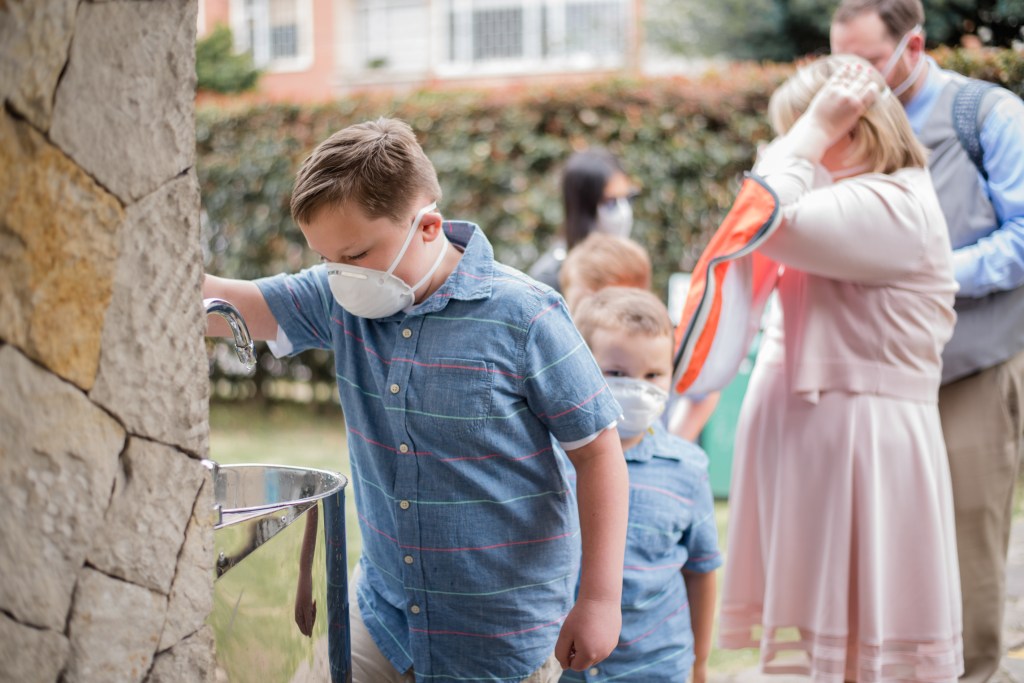
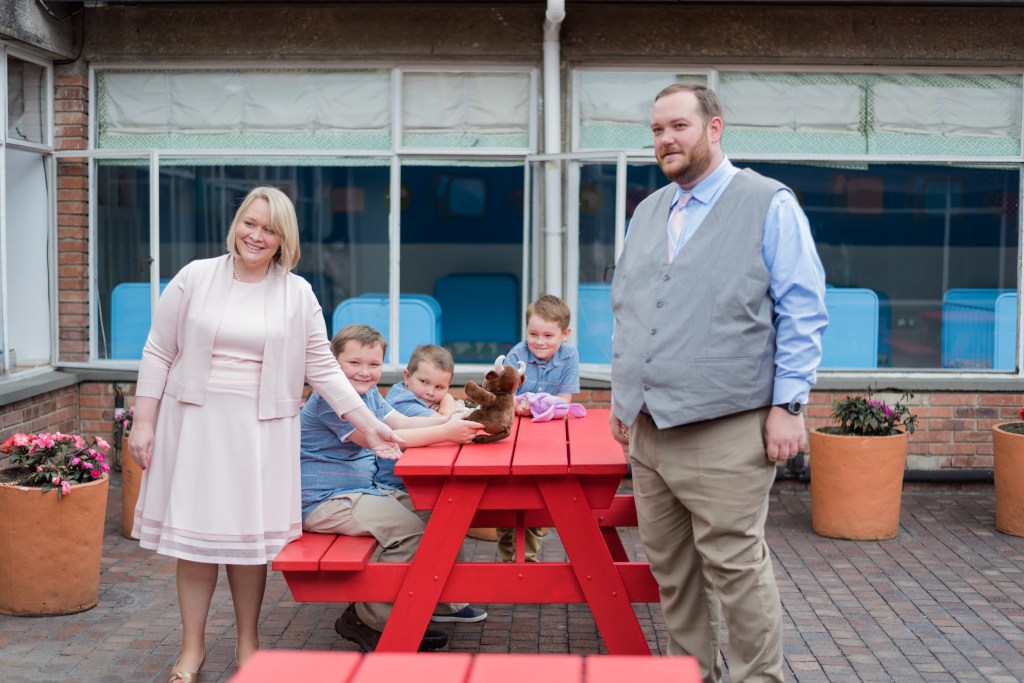
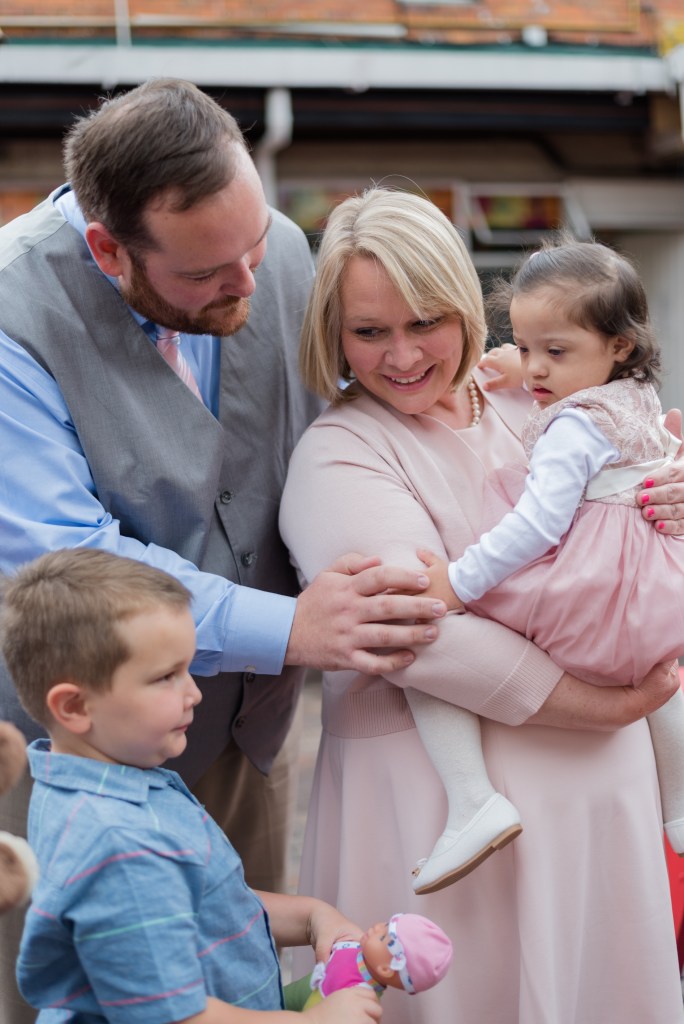
We left breakfast and went upstairs to get dressed. We were energized knowing that in just a couple hours Mila would be with us. The boys changed into matching light blue shirts with thin multi-colored stripes. I put on a pale pink dress, and Brandon wore a dress shirt and vest.
La Casa had told us to bring an outfit for Mila. The outfit is kind of a big deal as they view it as the first symbol of Mila’s new life and family. Given this symbolism and the fact that Colombian culture already puts emphasis on having a well-groomed and well-dressed appearance, I fretted over what outfit to bring.
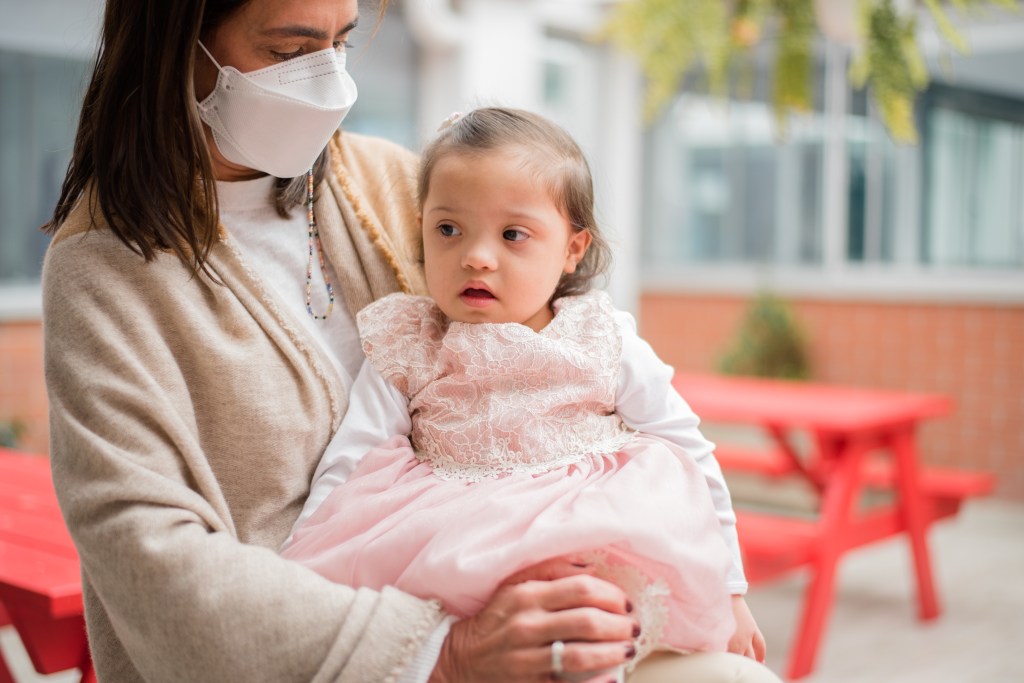
After many dress purchases, we had decided on a shimmery pink dress with soft cream lacing and a simple pair of white shoes. It was beautiful. I packed it up into a bag to take with us, looking at it and realizing we’d see her wearing it very soon.
Our driver, Jaime (pronounced Hi-may), arrived at the hotel at 10am that morning. We piled in the van and got situated. The boys had no carseats as no one in Colombia uses them. The cars have seat belts, but no one uses those either, at least not in the back seats. On our first few outings in Colombia we had fumbled with trying to dig out and use the seat belts but soon gave up and for the remainder of our trip, we rode like the seat-belt-less locals.
On our way to La Casa that morning, we stopped to pick up Julie, a young lady who works with adoptive families and was helping us while in country. It took us about 45 minutes to get to La Casa, and as we pulled up, we passed around N-95 masks to replace our cloth masks we were already wearing.
The date was May 21, 2021, and Colombia was still being hit hard with COVID-19. The vaccine was slowly making its way to the population but at that time was only available to the elderly. As such, the government required masks to be worn whenever people were outside their places of residence. This meant within vehicles, outside at parks, everywhere. Biking, running, hiking, doing anything, everyone ages 2+ were required to wear masks. And for this particular appointment, our agency had asked us to use N-95s.
As we crawled out of the van and onto the street in front of La Casa, we realized that since our children had never worn N-95 masks that we definitely should have given ourselves more time. The two wrap-around straps confused them. Allen had his mask turned sideways and had tried to loop each strap loosely over his ears. It dangled down off his face comically as he protested this new style of mask. Emmett and Everett had done better but were still struggling and pulling to make them fit. We crossed the road tugging straps and twisting masks and finally had mouths and noses covered by the time we had gone through the iron gates of La Casa and were standing in their courtyard.
Within the courtyard, green spaces were scattered with caregivers and kids. Sounds of fussing and crying, playing and laughing floated faintly from a distance. There was an outdoor pump sink, and we were asked to wash our hands before entering.
After washing up, we went into a reception area and were warmly greeted in a mix of Spanish and English. As I scanned the masked faces, I nodded and greeted one in particular who was familiar. Her name was Diana, and she had been on most of our video calls with Mila.
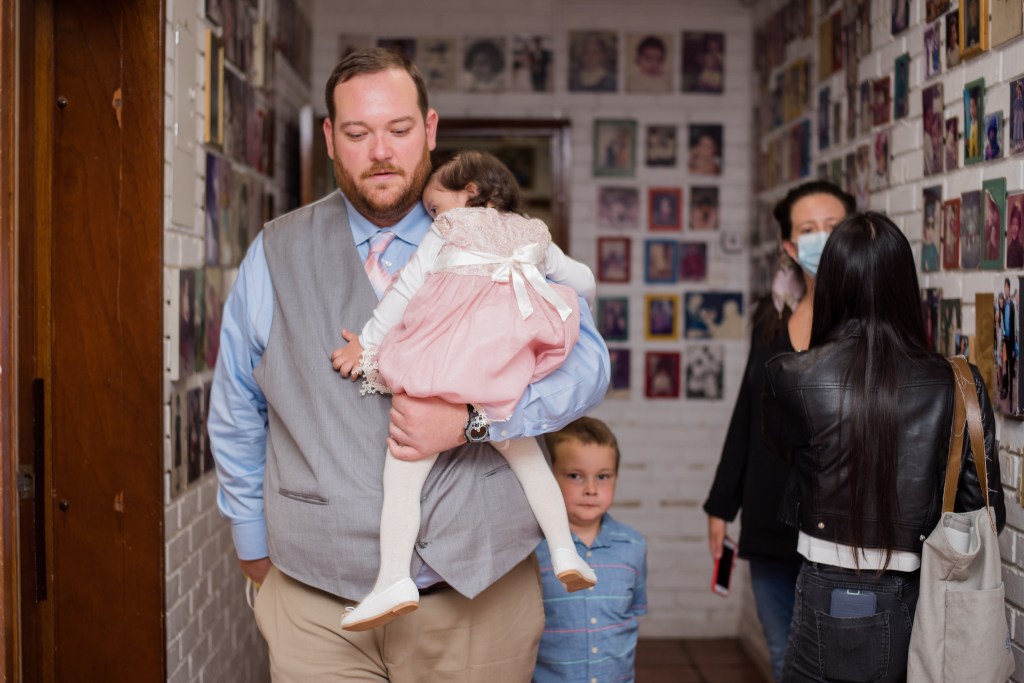
We followed Diana down a waxed brown stone hallway. Along the white brick walls were old pictures of children. We glanced at the young faces trailing down the walls and decided they must have been past orphans at La Casa. As we kept walking, there seemed to be hundreds of them. There were ones that were framed in various shades of wood while others were displayed unframed. The photos showed age not only from the darkened yellow hews on the prints themselves but also by the style of dress within the photos. La Casa had been caring for children for over 75 years, and some of the prints looked to be from their early years.
Everett scanned the walls as we walked. Not an ounce of shyness in this boy, he piped up, “Is Mila’s picture on this wall?” Diana smiled as she told him that he wouldn’t find Mila on the wall. But she added, “Do you want us to add Mila’s picture?” He nodded yes.
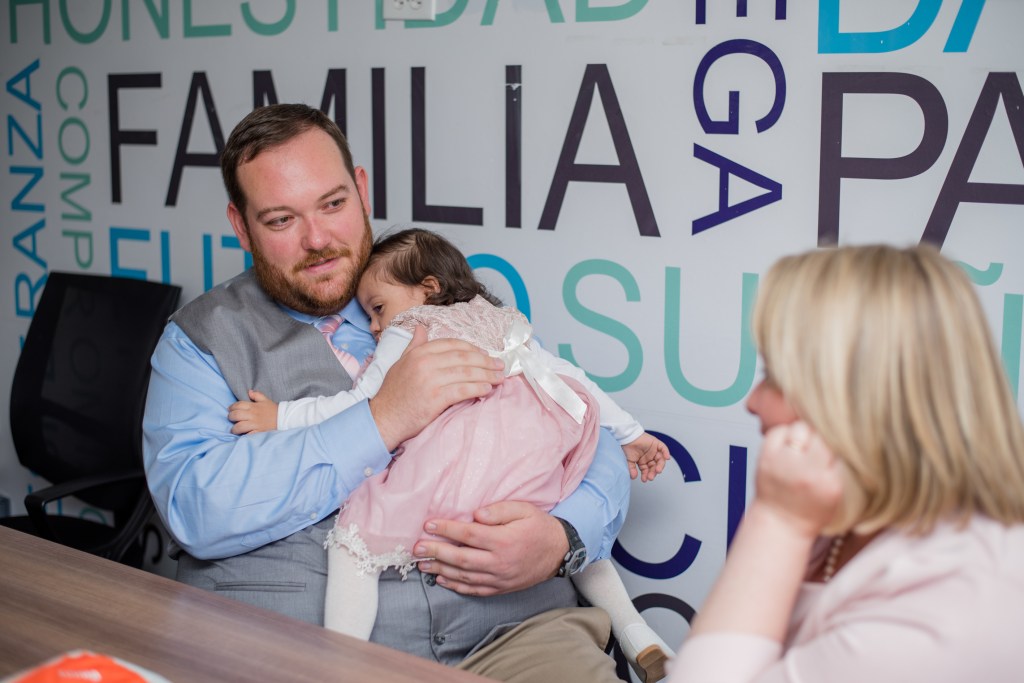
We were led into a room on the left with a conference table. One wall was painted with big Spanish words such as PAZ, AMOR, and FAMILIA. In the adjacent room we could see boxes and cubbies of toys – dolls, cars, and stuffed animals. I handed the bag containing Mila’s dress and shoes to someone, and we sat down to discuss some last minute items and sign a few remaining documents.
I expected a longer meeting time, but before we knew it, we were told we’d step outside into a center courtyard and they’d bring Mila to us.
The experience felt surreal and my legs almost felt like I wasn’t the one moving them as we walked to the area. They told us to remove our masks and gather near a red picnic table while we waited.
Nerves. Jitters. Joy. Peace. It was all bottled up as we stood and sat with our three boys waiting on Mila. Someone came and told us that Mila had been sleeping. They had woken her up, and she was crying.
Especially hearing that she was already upset, Brandon and I decided that when they brought her out, I should approach her first. They had told us that she hadn’t had a father figure in her life at the foster home, and we weren’t sure how she’d respond to Brandon.
We heard it slowly circling the courtyard through opened windows. Someone was walking the boxed hallway singing a very slow rendition of Mila’s favorite song.
La vaca Lola, La vaca Lola, tiene cabeza y tiene cola y hace moo…
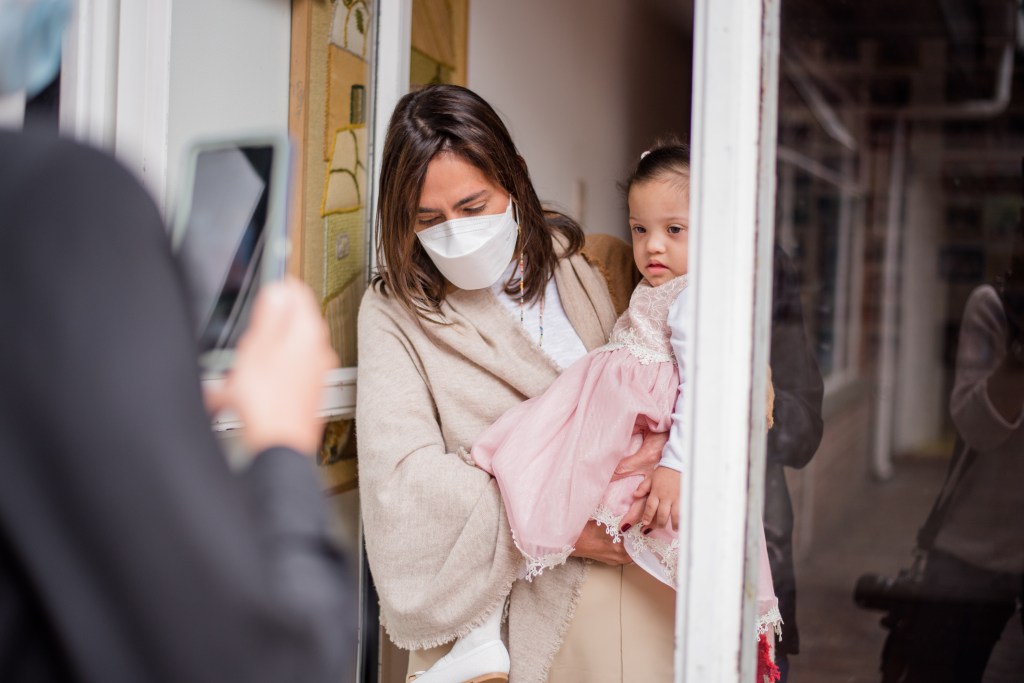
The lady appeared and walked through the narrow doorway to enter the courtyard. She was carrying Mila who was looking quite sleepy and unsure but not crying. We all waved, and I walked over to her.
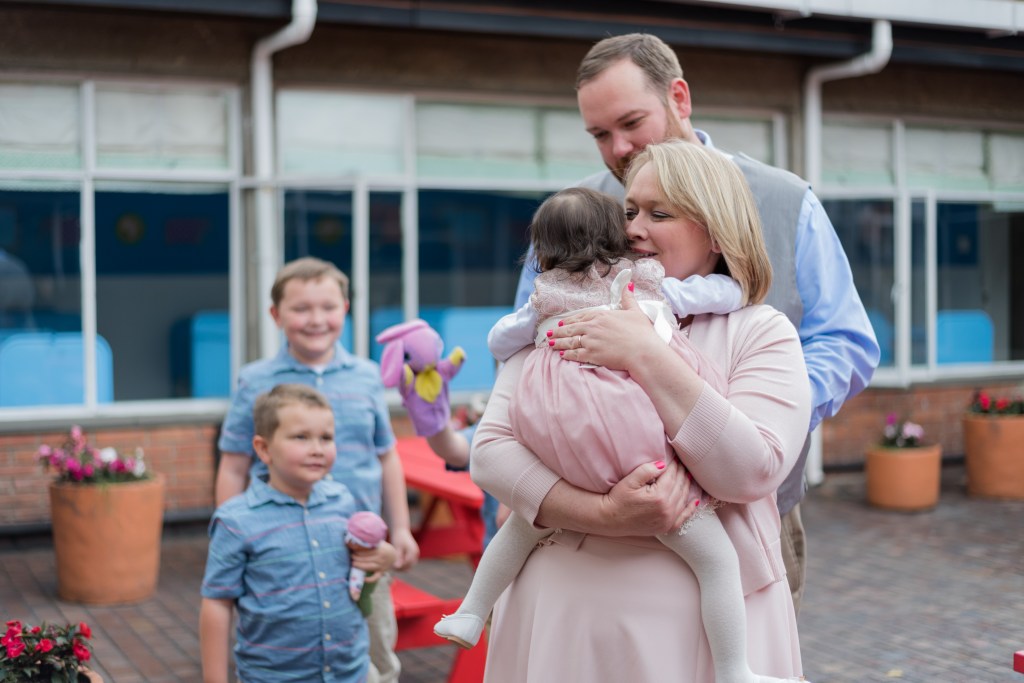
Mila had seen us on weekly video calls and in videos we had sent her for months. But with all the newness, she hesitated as I talked to her and reached for her. She was reserved but came into my arms without crying.
Holding her reminded me of the first time I had held my boys. But instead of being at a hospital in Greensboro, we were at a Children’s Home in Bogotá. And instead of weighing only a few pounds, she weighed 26 lbs and could already walk. Yet, even still, it felt much the same. There was belonging and responsibility. There was a feeling of love and protection.
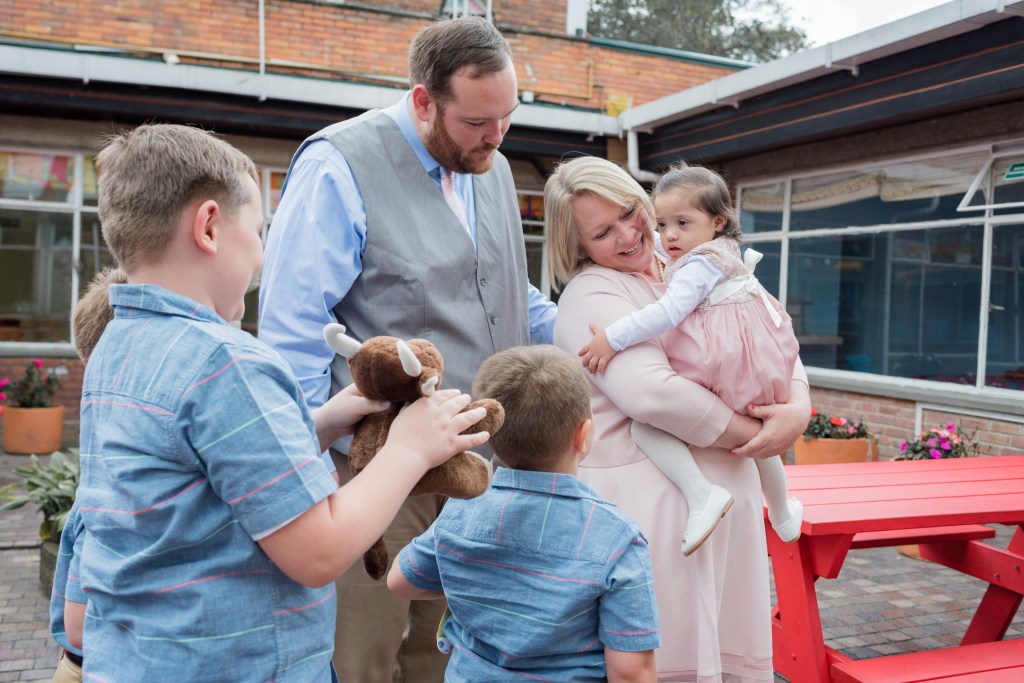
She was calm as I moved away from the La Casa staff and took her to our family. The boys each had toys to show her.
Emmett peered at her as joy showed on his face that spilled out through his bright smile. He had his hand in a purple bunny puppet and held the toy out for her to see.
Allen looked at her timidly as he held a small colorfully dressed baby doll. He himself hadn’t yet turned 5. We had discussed at great lengths with the boys the concepts of orphanages and adoption. We had talked about why we were adopting and prayed together for Mila. Before we left home, we had explored through journaling how the boys felt about flying on an airplane for the first time, what they thought about spending several weeks in another country, and how important their role was as brothers to Mila. They all were so excited to gain a sister. Allen stood on the picnic bench as I held Mila close to meet him. He smiled sheepishly and told her, “hola.”
Staying true to his gregarious nature, Everett chose his biggest smile to greet her and held out a stuffed cow making mooing sounds to get her attention.
She looked at us with a passive expression as she tried to process all these faces and people she had only ever seen on a screen. We quietly sang a few of her favorite songs that we had sung so many times on our calls and in videos.
La Casa staff asked us to come back inside to spend a private family moment in the conference room where we had started. As we all got situated, I sat Mila on the table in front of me putting her at eye-level as I sat down. Brandon was in the chair next to us and the boys were gathered at the head and across the table.
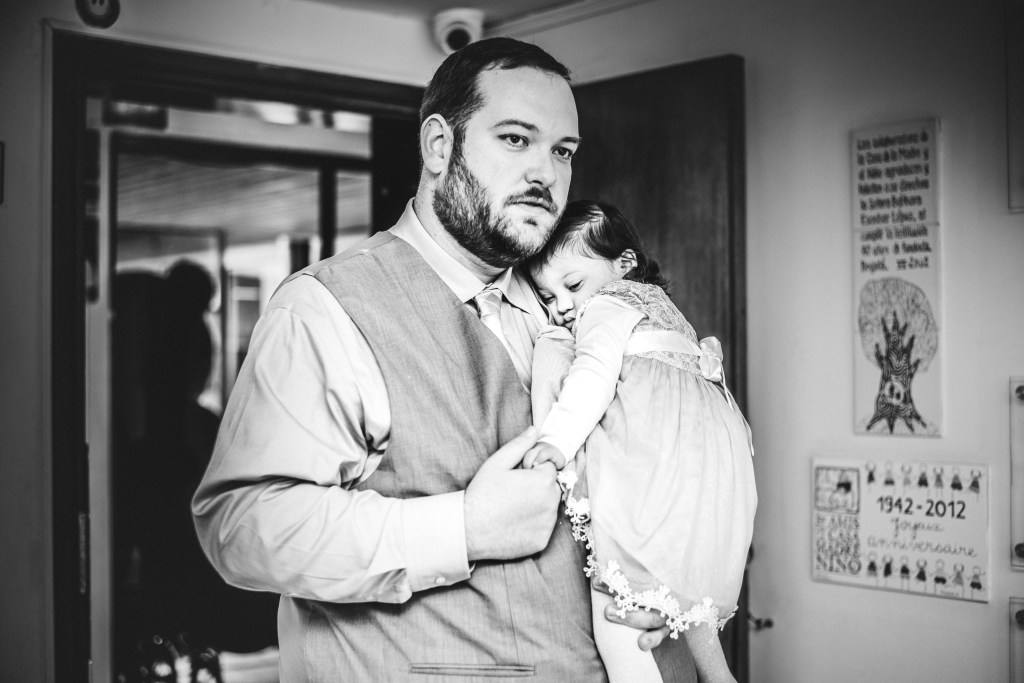
Brandon had held back all urges to get too close, not wanting to scare Mila. So her next move shocked us all. Sitting next to Brandon, she reached for him! We were so surprised that we sat stunned for a couple seconds as the reservations between the new father and daughter dissipated as he took her in his arms. She lay contentedly on his chest, and the look on Brandon’s face was pure joy.
The boys were touched as well as they looked on, watching their dad hold their little sister. I noticed the wetness in Everett’s eyes first and glanced to see it mirrored on Brandon’s face as well. This little girl had already turned these boys into teary puddles of mush. It was a precious sight.
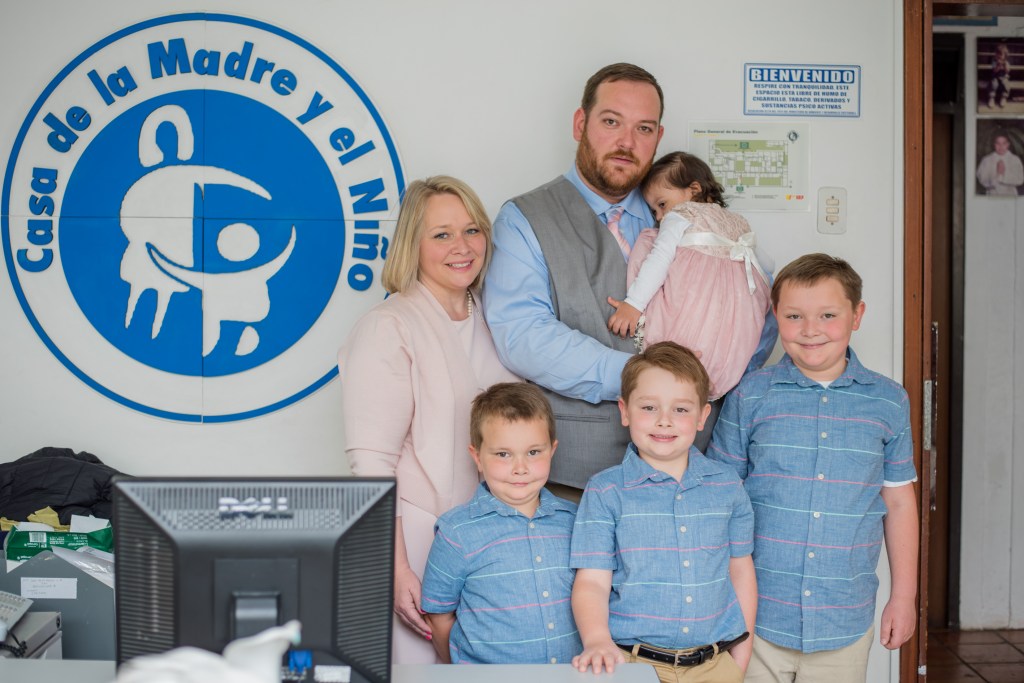
When it was time to leave, we retraced our steps down the brown waxed hallway trailing once more past all the old pictures. We stopped in the reception area for the photographer to take our picture beside the painted La Casa mural. Then it was all done. We walked out of La Casa de la Madre y el Niño as a family of six.
Encuentro day part two will be shared soon and will tell you how this day quickly became stressful and also share a few of our first struggles.








 stillsmallfaith.com